The Superstition Mountains & the Lost Dutchman Gold Mine
The Superstition Mountains, the Lost Dutchman gold mine legend of Jacob Waltz, Weaver's Needle, and hiking Lost Dutchman State Park along the Apache Trail.
No range in Arizona carries more mystery than the Superstition Mountains — the jagged wall of rock that looms over the western Apache Trail. For more than a century, treasure hunters have combed these peaks for the Lost Dutchman’s gold mine, and some never came back. This guide tells the legend, separates the story from what’s known, and points you to where you can experience the “Superstitions” for yourself. Most Apache Trail day trips roll right past their base.
The mountains themselves
The Superstition Mountains rise abruptly east of Apache Junction, a rugged volcanic landscape of cliffs, spires, and box canyons. Their most famous landmark is Weaver’s Needle, a towering rock column that features in nearly every version of the treasure legend as a directional clue. Today most of the range is protected as the Superstition Wilderness within the Tonto National Forest, with Lost Dutchman State Park guarding the western approach.
The legend of the Lost Dutchman
The story centers on Jacob Waltz (c. 1810–1891), a German immigrant — “Dutchman” is an old American corruption of Deutsch, meaning German, not a reference to the Netherlands. According to the legend, Waltz found (or was led to) an extraordinarily rich gold mine somewhere in the Superstition Mountains in the 1870s and worked it in secret, hiding one or more caches of ore.
Waltz never revealed the mine’s location publicly. In failing health, he moved to Phoenix, and on his deathbed in 1891 he is said to have described the site to Julia Thomas, a neighbor who cared for him. She and countless others searched — and failed. The mine, if it ever existed, has never been definitively found.
Where is the Lost Dutchman mine supposed to be?
Nobody knows, and no find has ever been confirmed. What the stories agree on is the neighbourhood. Arizona State Parks, which runs Lost Dutchman State Park, sums it up: “Most stories place the gold in the vicinity of Weaver’s Needle,” the rock spire inside the Superstition Wilderness. The legend goes back before Waltz: in the 1840s the Peralta family of northern Mexico supposedly worked rich mines in the range, and Waltz was said to have found the mine with the help of a Peralta descendant, then worked it with a partner, Jacob Weiser, and hidden caches of gold.
So the honest answer to “where is the Lost Dutchman mine” is: somewhere near Weaver’s Needle, if it exists at all. You can see the Needle from trails out of the Peralta Trailhead, and the western face of the range from Lost Dutchman State Park, a few minutes up SR 88 from Apache Junction.
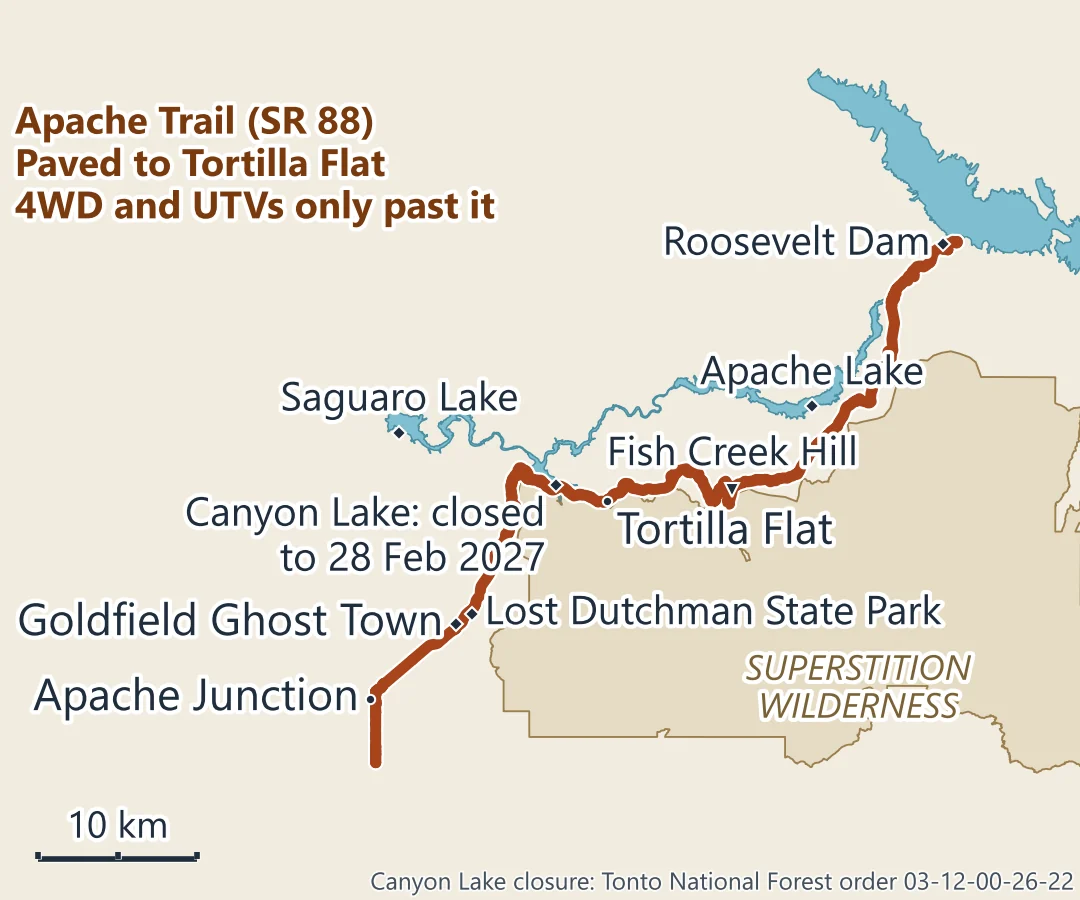
Fact vs. folklore
| Element | What’s known | What’s legend |
|---|---|---|
| Jacob Waltz | A real person who lived in Arizona and died in 1891 | That he possessed a fabulously rich secret mine |
| The gold | Waltz reportedly left a small cache of high-grade ore | That a working “mother lode” mine exists in the range |
| Weaver’s Needle | A real, prominent landmark in the Superstitions | That it points the way to the treasure |
| The searches | Many real expeditions have combed the range | That the mine is still out there to be found |
Geologists have long noted that the Superstition Mountains are volcanic in origin — not the kind of geology that typically hosts big gold lodes — which is part of why many historians treat the “mine” as folklore built around Waltz’s genuine but modest gold. That hasn’t stopped the searching, and the legend is now inseparable from the mountains’ identity.
Hiking Lost Dutchman State Park
You don’t need to hunt for treasure to enjoy the Superstitions. Lost Dutchman State Park, at the base of the range near Apache Junction, is the easiest access point, with trails for every level:
- Short & easy: interpretive nature loops with big views of the cliffs.
- Moderate: trails climbing toward the base of the range for closer looks at the rock formations.
- Strenuous: routes ascending into the Superstition Wilderness for serious hikers with proper preparation.
Hike in the cooler months (October–April), start early, carry far more water than feels necessary, and tell someone your plan — the desert is beautiful and unforgiving in equal measure. Summer hiking here can be genuinely dangerous.
Seeing the Superstitions on the Apache Trail
Even if you don’t hike, the Apache Trail delivers the mountains at their most dramatic. The drive skirts their northern flank, and a guided day trip includes a guide narrating the Lost Dutchman legend as the peaks slide by — often the highlight of the day for first-time visitors. Goldfield Ghost Town, at the mountains’ foot, leans fully into the mining history with its own mine tour and museum (see our Goldfield & Tortilla Flat guide).
Respecting the wilderness
If you do venture into the backcountry, remember it’s a protected federal wilderness. Any gold you somehow found would belong to the government, digging is prohibited, and search-and-rescue teams are called out regularly for hikers who underestimate the terrain and heat. The romance of the legend is best enjoyed with your feet on a marked trail — or from the comfort of a guided tour vehicle.
Ready to Book?
Want to see the Superstition Mountains and hear the Lost Dutchman story from a local guide? The featured guided day trip from Phoenix spends about an hour and a half in the mountains, stops at Goldfield Ghost Town, and adds a 90-minute cruise on Saguaro Lake while Canyon Lake is closed (cruise ticket bought separately).
See the Superstition Mountains Without the Driving
The Superstition Mountains, Goldfield Ghost Town and a 90-minute Saguaro Lake cruise, with hotel pickup. The cruise ticket is extra. Rated 4.9 out of 5 from 28 reviews on GetYourGuide. Free cancellation up to 24 hours before the tour. From $215 per person.
Check Availability & Book